Woodworking On The Homestead
  • Home
  • About Me
  • Blog
  • OTHER INTERESTS
  • Contact
  • PROJECT PLANS
JFK ASSASSINATION

10/21/2022

0 Comments

 
IMPORTANT NOTE:
All photographs are property (c) of the author, and
MAY NOT BE REPRODUCED IN ANY FORMAT

​INTRODUCTION

​ONCE IN A LIFETIME
, an opportunity presents itself through sheer coincidence, which from the outset can only be called amazing. One such occurrence happened to me around 1988 after I read a book on the assassination of President John F. Kennedy.

I recalled, after studying many of the photographs in the book, that my Uncle Rusty (now deceased) had some assassination-related materials which he had held on to since his days with the Dallas Police Department (DPD). He had long since retired, and my interest in reviewing his old documents and photographs was gladly received by Rusty.

This inspired me to write the book, JFK First Day Evidence, as a result of that chance encounter set off by that earlier chain of events. The original Crime Lab photographs had been stored away by Rusty in an old briefcase for nearly three decades, almost forgotten along with the recollections of the men who made them. I asked Rusty if we might interview the men who had worked with him in the Crime Lab back in 1963, and he agreed.

Organizing the photographs and memories of those men who worked the evidence in the assassination of JFK was a tremendous undertaking requiring taking five years and countless hours of organization and research. Having no grand budget, Rusty and I took it upon ourselves to learn the many accusations made through the years of a possible conspiracy and tried to develop only the facts according to the men who were there first. What we found on a regular basis continually surprised us and, in most instances, belied the existence of a second gunman, although through no grand design or pre-drawn conclusions on our part. Rusty and I always maintained an open mind in regard to the true evidence in the case.

This presentation provides a partial overview of some of the ORIGINAL evidence collected by the Dallas Police Crime Lab BEFORE the intrusion of the federal government, as well as reflections and background of some of the Dallas officers working the case. All evidence presented remains unfiltered, and preceded the federal investigations into the shooting. The 1964 Warren Commission (WC) and the 1979 House Select Committee on Assassinations (HSCA) provided volumes of testimony and evidence collected about the shooting, and included only partial evidence collected by the local DPD Crime Lab.

It was our desire from the outset to reveal ALL of the information possessed by Rusty in an easy to read, organized format, to aid in the public’s understanding of the true facts in the case. If conspiracy charges are to be leveled, let the accusers be aware of ALL the evidence uncovered by the first men who were there.

​R. L. (Rusty) Livingston in the DPD Crime lab
Picture

​JFK First Day Evidence
by Gary Savage
Picture

​If you'd like to purchase a copy of my book containing all of the evidence photos collected by Rusty, simply go to the contact page, and I'll get a signed copy to you.

​EVENTS OF THE DAY

​FRIDAY, NOVEMBER 22nd, 1963 began for President John F. Kennedy on an upbeat note. After spending the night in Fort Worth’s Texas Hotel, the President made his way down to a parking lot across the street and addressed a crowd of almost 5000. Jackie was not with him at the speech, and he told them, “Mrs. Kennedy is organizing herself. It takes her a little longer, but of course, she looks better than us when she does it.”
​
He then returned to the hotel ballroom now accompanied by Jackie, and addressed the Fort Worth Chamber of Commerce breakfast, receiving a cheering ovation from the excited crowd. They returned to their room, and noticed an anti-Kennedy ad in the local paper. He remarked to Jackie, “We’re heading into nut country today. If anybody wants to shoot me from a window with a rifle, nobody can stop it.”

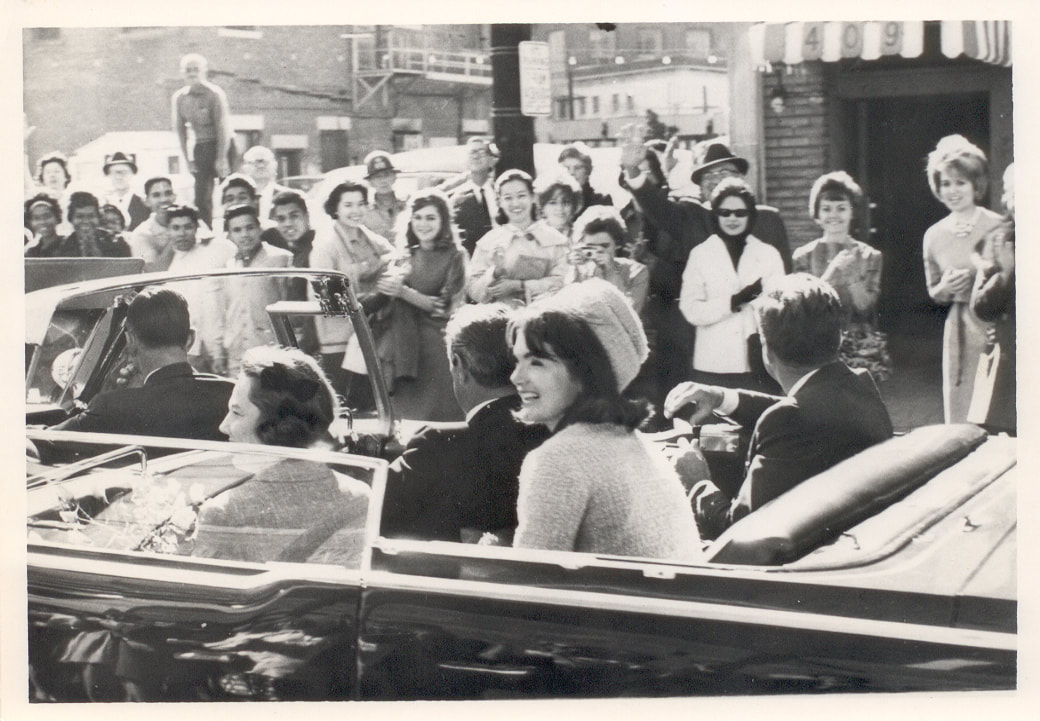
After a short flight from Fort Worth to Dallas Love Field, the President and Jackie descended the stairs from Air Force One to the excited crowd. The President broke from the entourage and shook as many hands as he could before being directed to the Presidential limousine. The clear plastic convertible top had been removed prior to arrival despite the possibility of rain (which had dissipated). He was joined by Jackie, Texas Governor Connally and his wife, along with two Secret Service agents. (The actual limousine is now on display in the Henry Ford Museum in Detroit Michigan).

The parade route through downtown Dallas had been planned by the Secret Service days before and printed in the local Dallas paper. Officers were positioned along the route and in the motorcade from Love Field to the Dallas Trade Mart, where the President was to speak at a luncheon at 12:30 p.m.

All of the initial trepidation was forgotten as the motorcade made its way slowly through the roaring crowds lining the route. Few words were spoken by the occupants, as the crowds surged to get a firsthand look at the President and first lady. At approximately 12:30, the limousine entered Dealey Plaza, a two block wide open area on the west end of downtown.
​
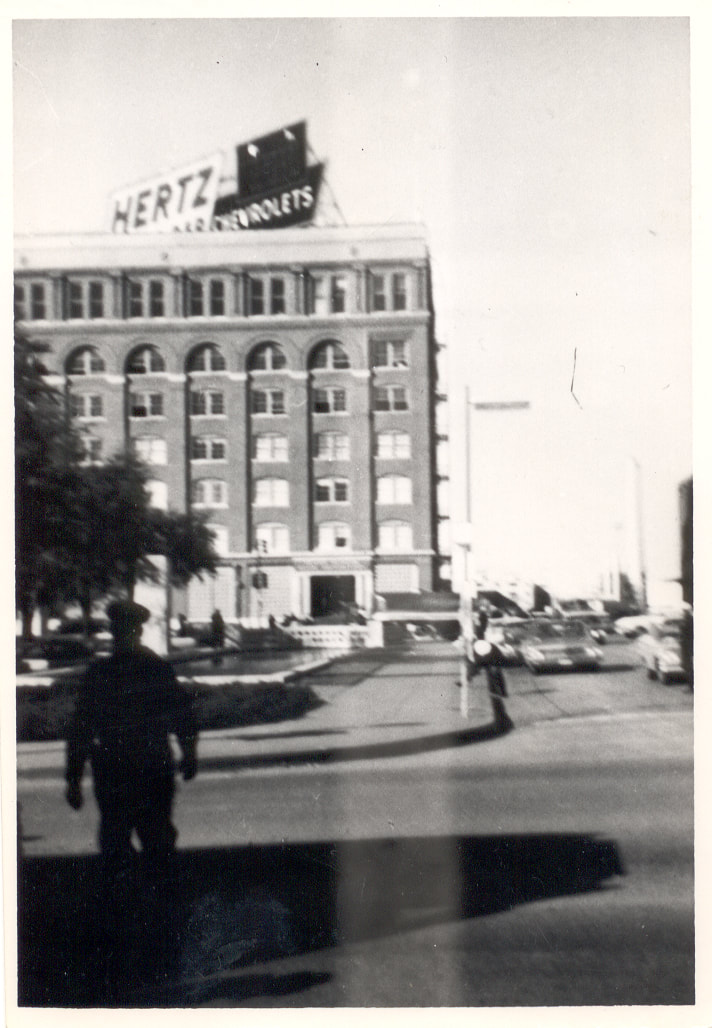
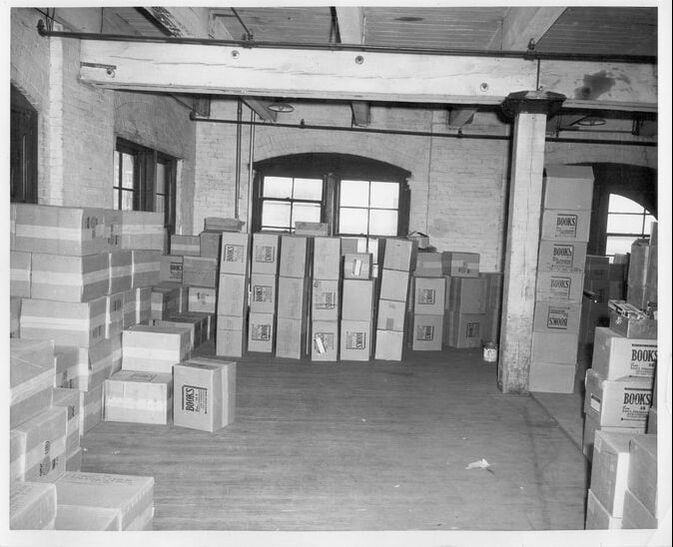
In the northeast corner of the Plaza stood the seven story tall Texas School Book Depository Building, an old brick structure filled with stacked boxes of school textbooks. After entering the wide open plaza area, Mrs. Connally leaned back and remarked to the President that Dallas loved him. As the motorcade rounded the corner from Houston Street onto Elm Street, shots began to ring out.

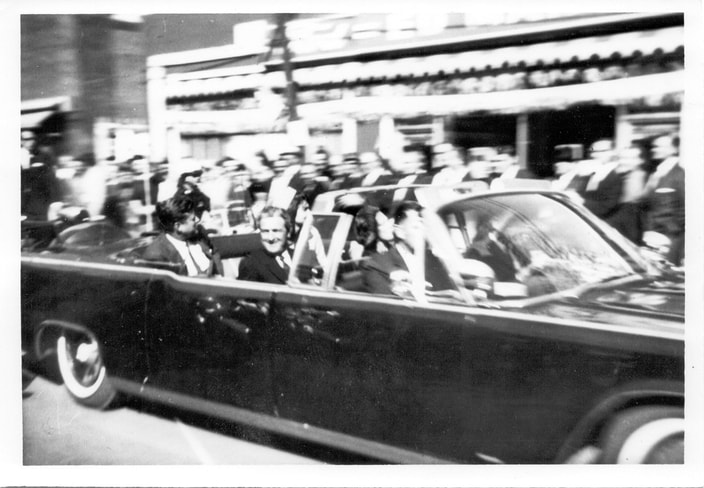
​Citizen Photo given to DPD
The Presidential Motorcade In Dallas
Picture

​​Citizen Photo given to DPD
Texas School Book Depository Building
Picture

​​​Citizen Photo given to DPD
Jackie Kennedy's Jump Seat positioned higher than Governor Connally
Picture

​​THE FIRST SHOT startled everyone, and President Kennedy stopped waving and glanced to his right. A little girl across the street from the Depository had been running down the sidewalk, abruptly stopped, and glanced in the same direction. One witness in the Plaza later testified seeing a rifle sticking out an upper floor window of the Depository prior to the motorcades’ arrival, but assumed it was a Secret Service agent. ​


​Dallas Police Crime Lab Photo
Oswald's View from Sixth Floor Window
Picture

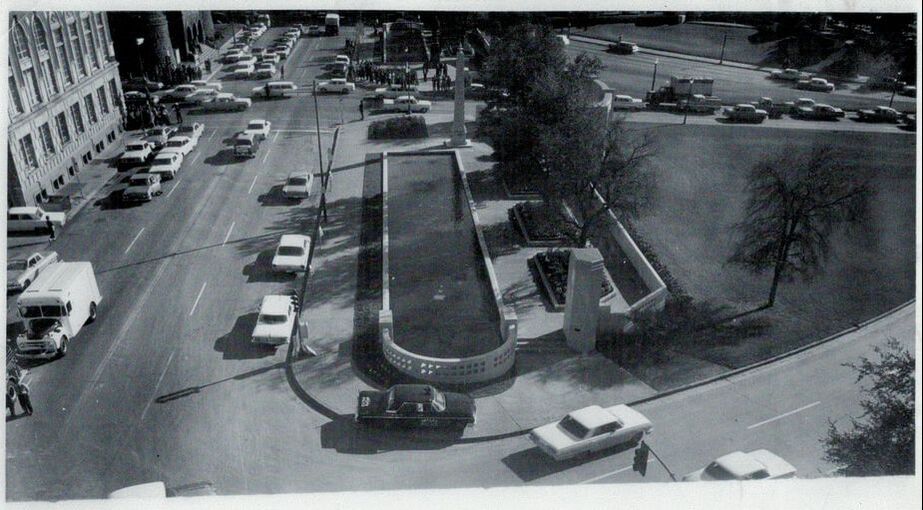
The reactions of all the victims and witnesses during the shooting were recorded on an 8mm home movie camera by Abraham Zapruder from a pedestal overlooking the Plaza on the north side. The film has been thoroughly analyzed frame by frame throughout the years following the tragedy. It contains in gruesome detail the fatal injuries to the President, along with the severe gunshot injury to Governor Connally. Many witnesses later testified to the WC that they thought at first they had heard firecrackers. Some immediately recognized it to be a rifle shot however, and believed it came from the Depository. The shape of the buildings surrounding the plaza provided an echo chamber making it difficult at first to pinpoint the origin of the sound.

​​Dallas Police Crime Lab Photo
(Taken on Monday following the Friday Assassination)
View of Elm Street as seen by Abraham Zapruder
Picture

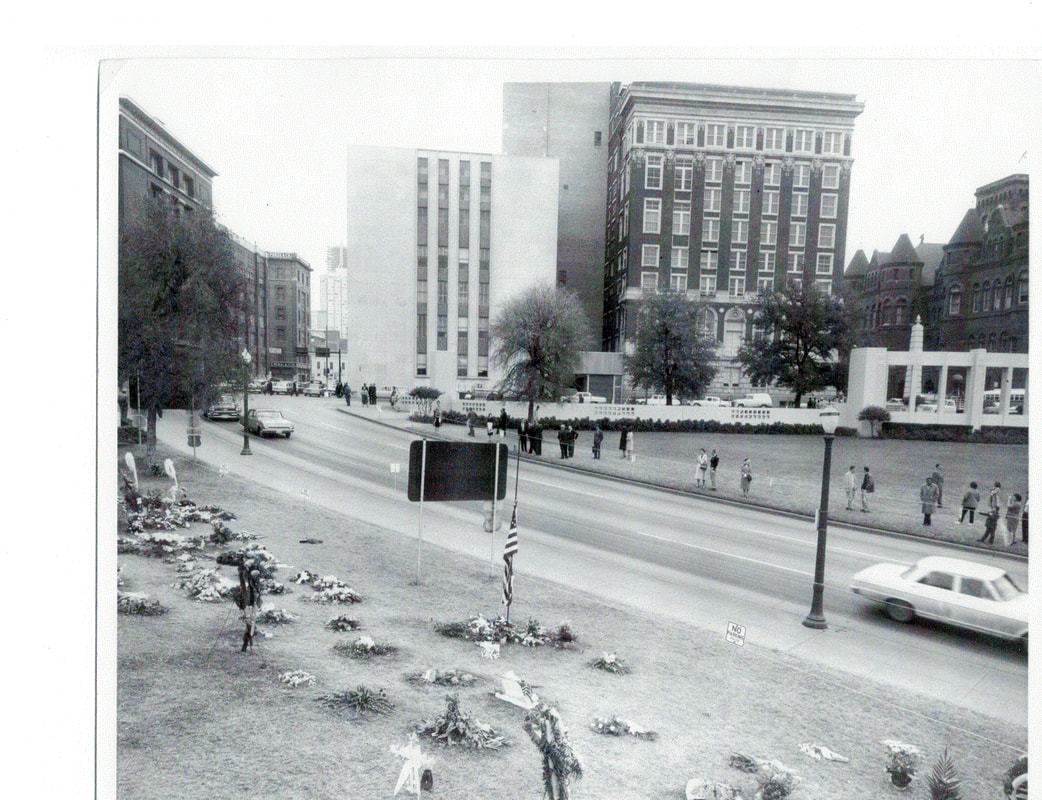
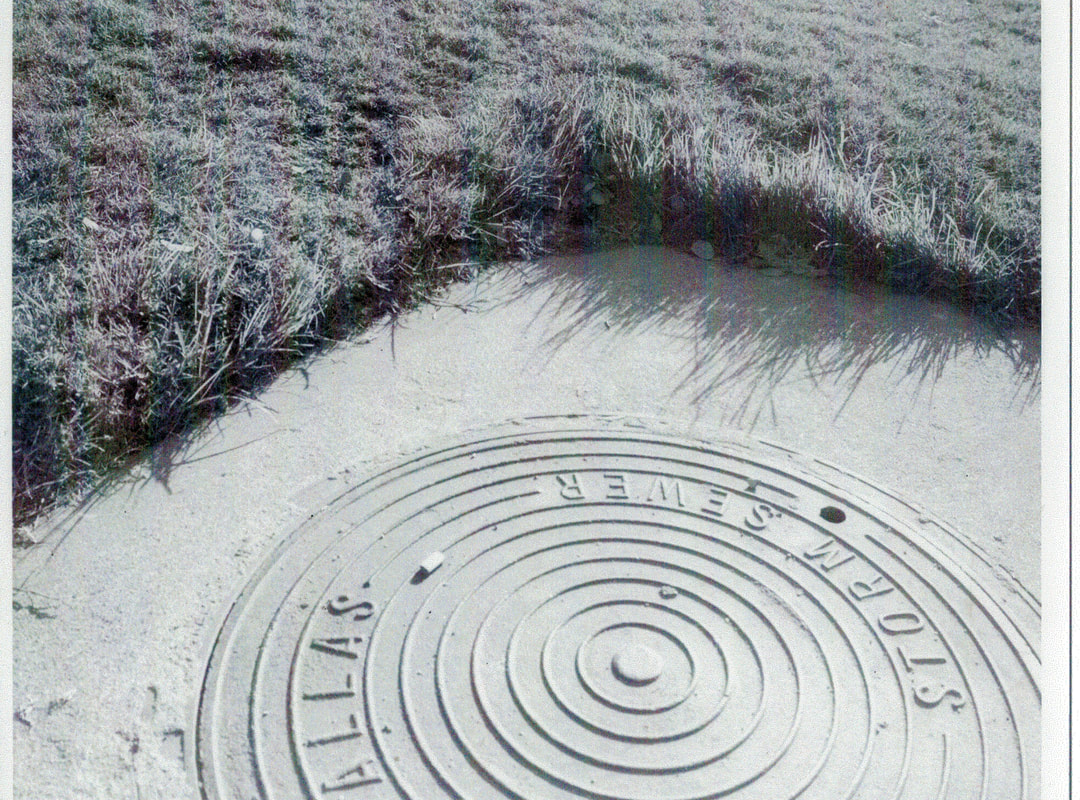
​Two witnesses later reported the first shot missed the limousine entirely, hitting the sidewalk on the north side of Elm Street near the Stemmons Freeway sign. (Take a look at the view above from the window as seen by Oswald. Notice the protruding traffic signal pole on the bottom right area. A closeup photo later emerged indicating an indentation possibly made by the shooter and causing the ricochet).  Another motorcycle officer beside the limousine also stated the first shot hit the curb, and not the President. He also stated the President looked over his shoulder after the first shot was fired. Governor Connally, seated in the center seat in front of the President, also did an abrupt turn to his right at the same moment. 
​
A small chuck of concrete from the Elm Street curb ricocheted forward and struck a bystander standing near the Triple Underpass on his cheek. As the first shot rang out, James Tague felt a sting on his cheek and quickly ducked behind a concrete pillar. Governor Connally steadfastly claimed he was not struck by the first shot.
​
Dallas Police Crime Lab Photo
Elm Street Curb where Shot Ricocheted
Picture
​
​At first, the President did not realize what had just occurred. He once again casually began waving his right hand. As the film shows, the limousine disappears behind a road sign at the exact time a second shot was fired. As the President and Governor Connally emerge back into view, an obvious reaction to being struck by both men can be seen. The president raised his two arms as if to shield his face, and Connally falls into his wife’s lap seated to his left.


The final shot was fatal, striking President Kennedy in the head. The brutal scene was witnessed by those near, and forever burned into their memory. A national tragedy had just occurred, forever changing the history of the United States. The lasting effects are still felt to this day.


​THE ASSASSIN

​
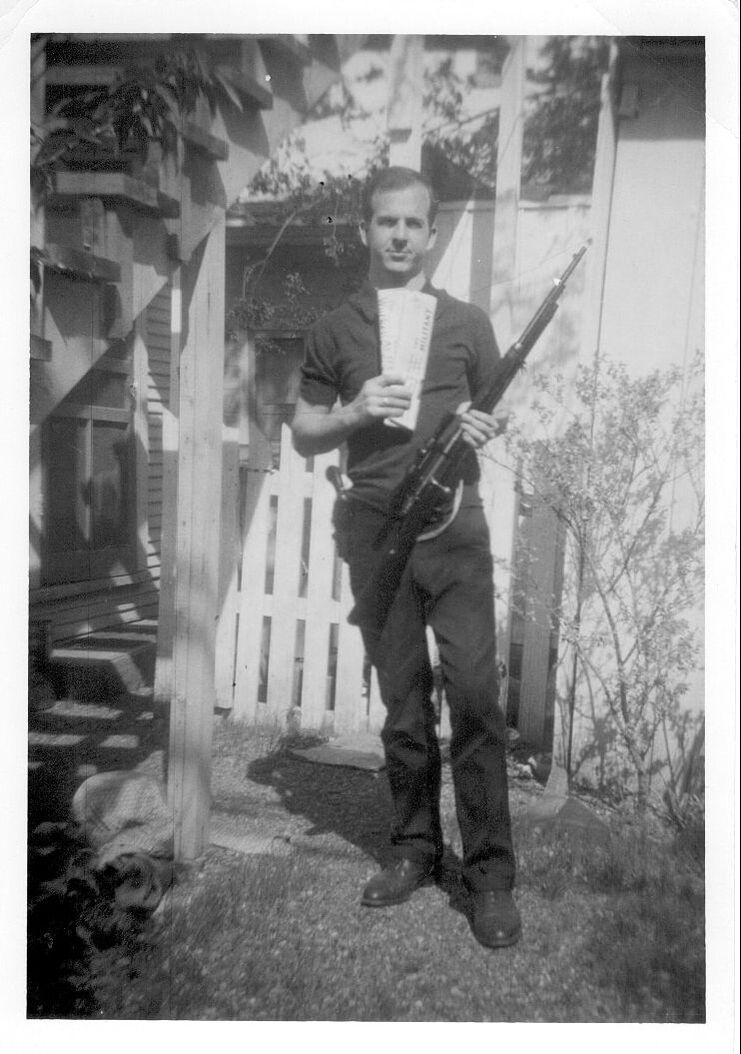
Dallas Police Crime Lab Photo

Infamous Backyard Photo (WC 133-A) Processed by Rusty Livingston
Picture

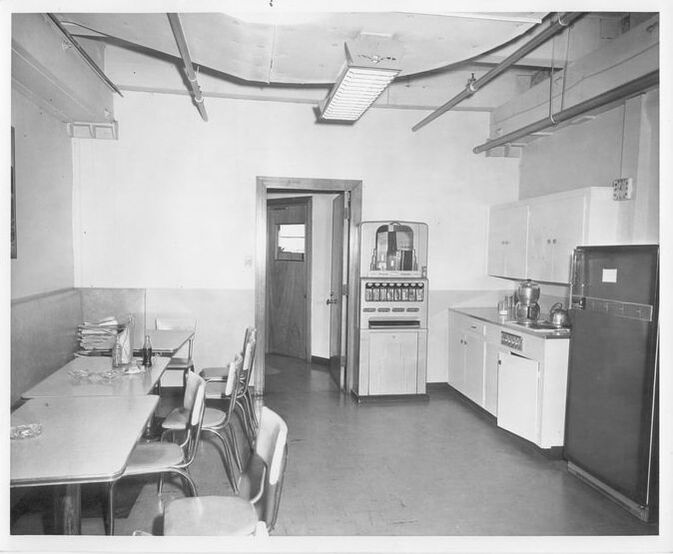
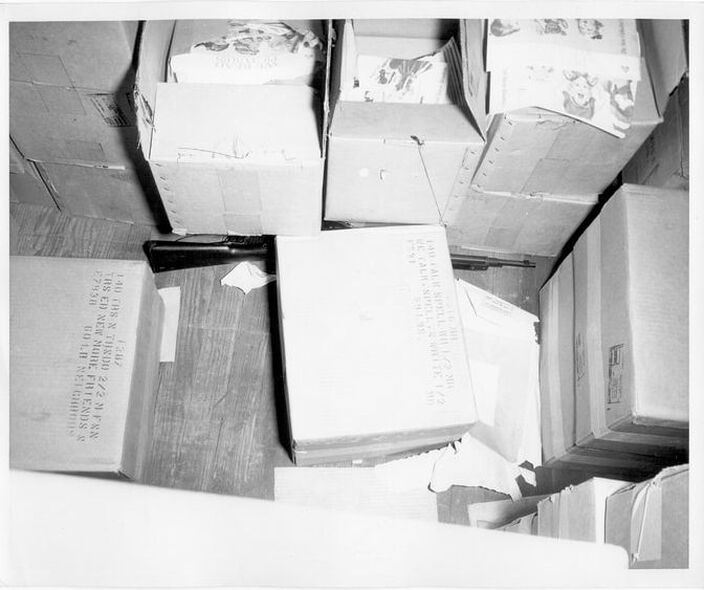
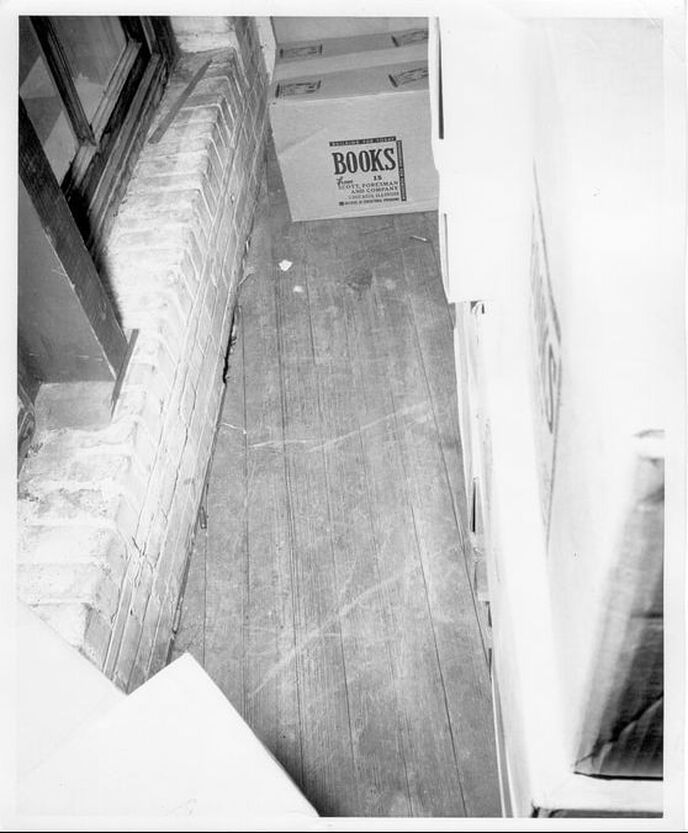
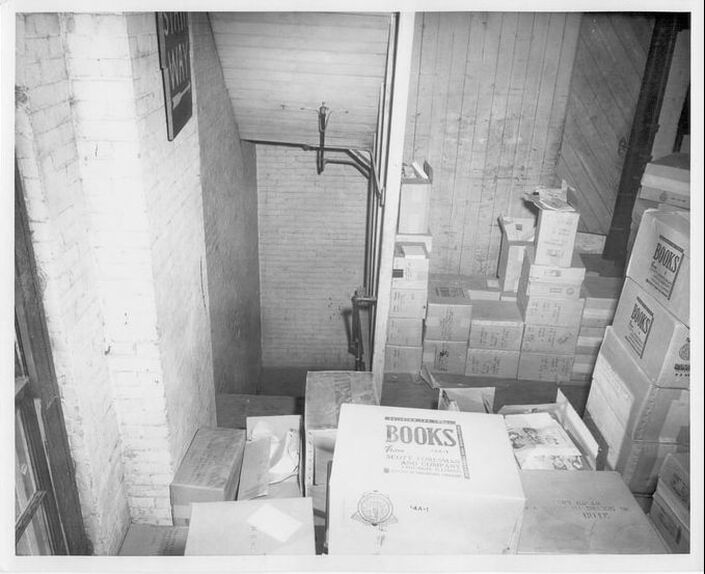
LEE HARVEY OSWALD leaned slightly forward and quickly glanced at the disappearing motorcade through the sixth floor Depository window. Three spent rifle hulls had been ejected from his rifle and now lay on the wooden plank floor to his right. He quickly turned to his rear and exited along the east wall and north wall, making his way to a narrow staircase in the northwest corner. Before entering the stairs, Oswald placed his rifle behind a stack of boxes on his left and quickly descended to the second floor lunch room. Upon entering, he was noticed by a Dallas officer who had entered from the front door of the Depository and headed up the stairs. Oswald was immediately cleared as an employee by the building supervisor, and the search continued. ​

​​Dallas Police Crime Lab Photo
Depository Second Floor Lunch Room
Picture


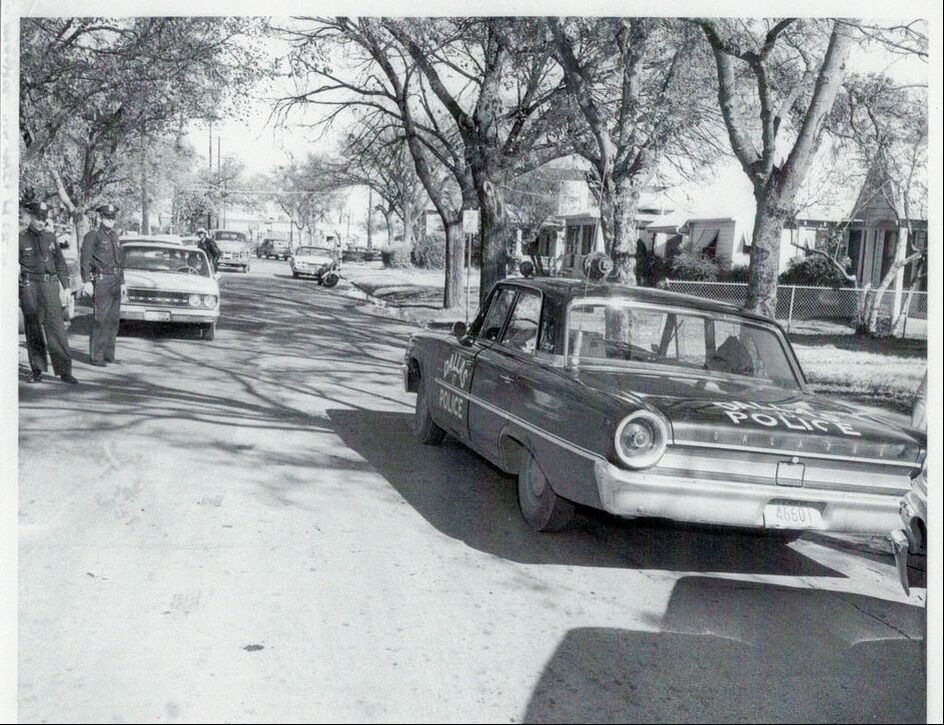
​Oswald casually bought a coke from the machine and proceeded to calmly walk out the front door of the building, making his way to the suburb of Oak Cliff and a bedroom he had previously rented. He picked up a revolver and jacket and began making his way to an unknown destination. (Many have speculated as to where he was headed, including this writer). A description had gone out to be on the lookout for a man in a t-shirt, and Officer J.D. Tippit spotted Oswald who fit the profile. 
​
After Tippit stopped, he motioned for Oswald to come to his passenger side window. After a few words, Officer Tippit exited his patrol car and proceeded around the front. Oswald quickly pulled his revolver and shot Tippit four times.

​​Dallas Police Crime Lab Photo
Officer Tippit Crime Scene
Picture

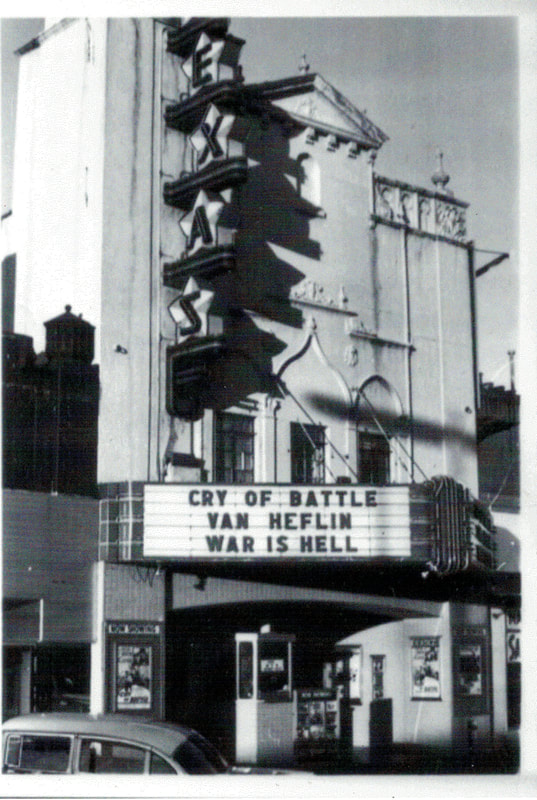
​He then continued on to eventually duck into the Texas theater where a movie was underway. Johnny Brewer noticed Oswald entering, and notified the Dallas police who were intensely searching for the police shooter. The police raced to the theater where Brewer pointed Oswald out.

​
Officer Nick McDonald approached the man from the front, not making eye contact. He then turned and ordered Oswald to stand up. He struck the officer with one hand and pulled out his revolver with the other and fired. Thankfully the gun misfired due to the officers hand grabbing the revolver slowing the hammer action. Other officers dove into the scene and quickly subdued and cuffed Oswald, loading him into a waiting patrol car out front.

​​Citizen Photograph
The Texas Theater
Picture

​​Dallas Police Crime Lab Photo
Officer Indicating Seat Used by Oswald
Picture

​Oswald was immediately escorted to the third floor homicide office of the Dallas Police station. Homicide Detective Gus Rose first began asking his name, and was told by Oswald, “You figure it out!” Two different forms of ID were then found on the suspect, Alex Hidell and Lee Harvey Oswald. The chance encounter by Officer Tippit had led to capture of the killer of Officer Tippit as well as the President of the United States.

Due to the injuries, the presidential motorcade was immediately diverted past the scheduled stop at the Dallas Trade Mart, and sped to Parkland Hospital in Dallas. Governor Connally was first helped out of the limousine to be rushed to surgery and eventually recovered his wounds. The president was not immediately allowed to be released by Jackie, who still cradled him in her arms. After some compassion and persuasion, his fatally injured body was covered by a coat jacket, then lifted and carried to an emergency room inside. Life saving measures were attempted, but quickly proved futile. The President was declared dead at 1:00 p.m.


FOLLOWING THE ASSASSINATION, a heated confrontation occurred between Secret Service Agents and Dr. Earl Rose, the county medical examiner. Rose informed the Agents that Texas laws required an autopsy which could be done immediately. The Agents informed him that they were taking the body back to Washington for their people to do the autopsy, and subsequently pushed the president’s body (already loaded in a delivered casket) past the protesting local officials present and loaded into an awaiting ambulance.

The body was then transported to Love Field and loaded aboard Air Force One. Then Vice-President Lyndon Johnson, also in the motorcade, had earlier arrived to Love Field and boarded the president’s plane (not Air Force 2 in which he had arrived). Johnson had summoned U.S. Federal Judge Sarah Hughes to swear him in as President. He requested everyone come forward to the plane’s stateroom to witness the swearing in, including Jackie. Air Force One then immediately departed for Washington D.C.

This marked the beginning of the problems created in the assassination investigation by federal authorities. After arrival in Washington, an ambulance transported the body to Bethesda, where inexperienced Navy doctors performed a less than precise autopsy. Military personnel were looking on and actually offered suggestions to the doctors as they proceeded with their work. Much of the confusion which exists today could have been avoided if the autopsy had been done by Dr. Rose back in Dallas as Texas law at the time demanded.
​
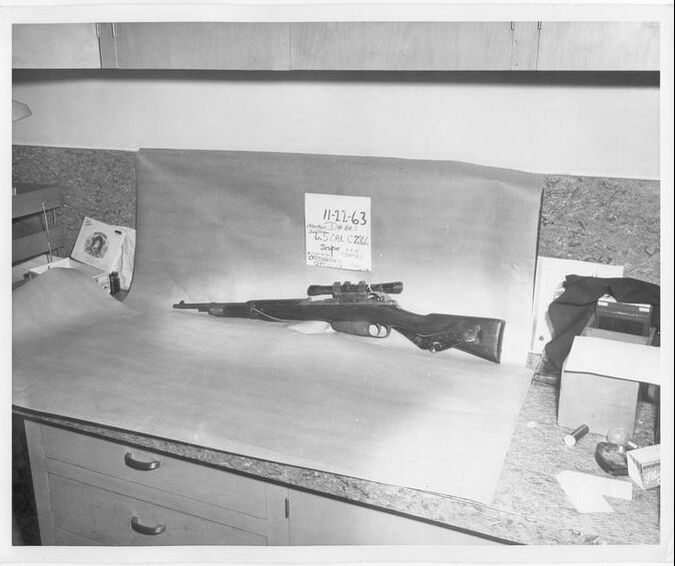
In 1963, the murder of the President was not a federal crime, and the local authorities had jurisdiction in the investigation. However, the Dallas police were asked to release the rifle which was found in the Depository to the FBI on the night of the shooting. It was given by Dallas Police Crime Lab Lieutenant John Carl Day to FBI agent Vincent Drain at approximately 11:30 p.m., witnessed by Rusty in the Crime Lab office. The rifle was the only item requested to be released by the FBI at that time. A palm print identified as Oswald’s had been located and lifted from the disassembled rifle barrel by Lieutenant Day before the FBI took possession of it. The lift of the palm print was not given to the FBI at that time since the rifle had been the only item requested to be released.
​

​THE CRIME SCENE EVIDENCE

​A TREMENDOUS AMOUNT OF EVIDENCE was collected by the Dallas Police. The Crime Lab was working overtime, collecting evidence from the Depository, as well as Oswald's residence and the home of Michael and Ruth Paine.

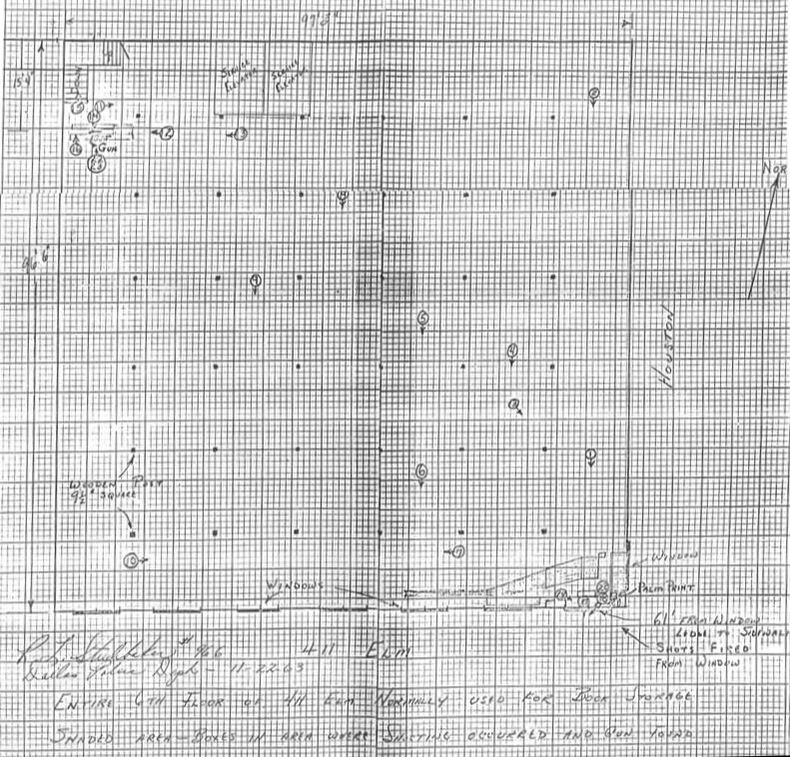
At the Depository, an extensive survey was done of the entire sixth floor. As photographs were made of the crime scene, a map was drawn to indicate the direction of each photograph in order to document precisely the entire area. Detective R.L. Studebaker drew the map dated 11-22-63 as he went along and photographed.
​
​Dallas Police Crime Scene Map by R. L. Studebaker
Depository Sixth Floor
Picture

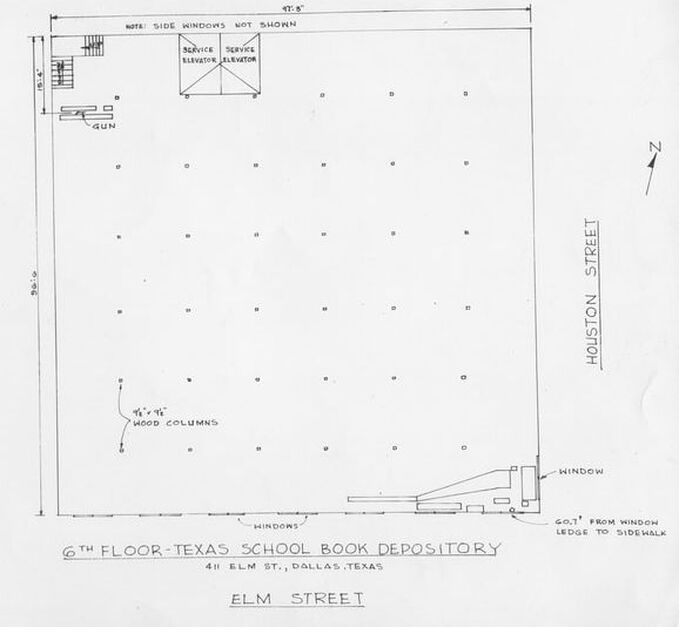
Dallas Police Scaled Drawing Showing the Rifle Location
Picture

​

​One very important thing to note is that the photographs presented here are first generation copies from the original negatives. The photographs presented to the Warren Commission were photographs of the original photographs, or second generation. A loss of detail and quality was evident, and the Dallas Police police retained all the original negatives. This was brought out in the WC hearings by Lt. Carl Day, the head of the Crime Lab.


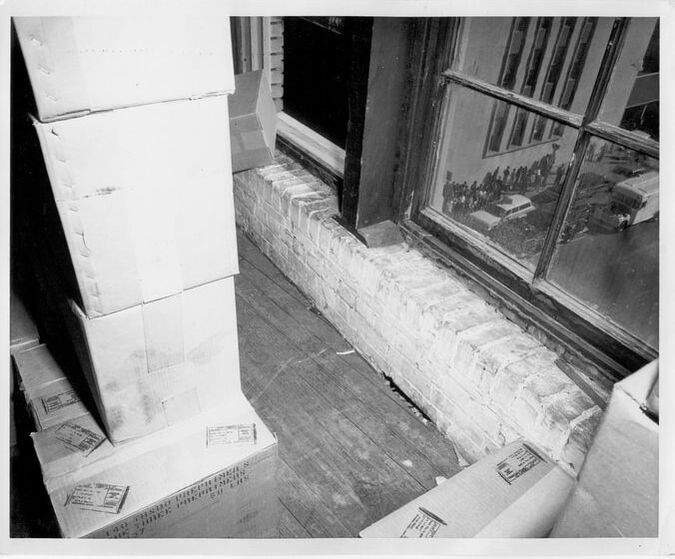
Rusty took the time to make himself an original copy of an entire set which were printed in my book JFK First Day Evidence. Some have been included here, but all are included in the book. Also, some of the photos have not been seen before, as the DPD did not send all of the evidence to the WC, only the print copies they thought best represented the evidence. Here are a some of the most relavent sixth floor photos:


​​Dallas Police Crime Lab Photo
Oswald's 6.5 mm Mannlicher Carcano Rifle
(On the Counter in the Crime Lab Office)
Picture

​​Dallas Police Crime Lab Photo #22
Rifle in the Location Found On the Sixth Floor
Picture

​​​Dallas Police Crime Lab Photo #21
Rifle Hulls left in the "Sniper's Nest)
Picture

​​Dallas Police Crime Lab Photo #19
​Sniper's Next Showing Three Hulls on the Floor
Picture
​​
​Dallas Police Crime Lab Photo #1

Rear of the Sniper's Nest On the Sixth Floor
(Showing Boxes Stacked by Oswald for Concealment)
Picture

​Dallas Police Crime Lab Photo #16
Rear Stairwell Used by Oswald
(to Exit to the Second Floor Lunchroom)
Picture

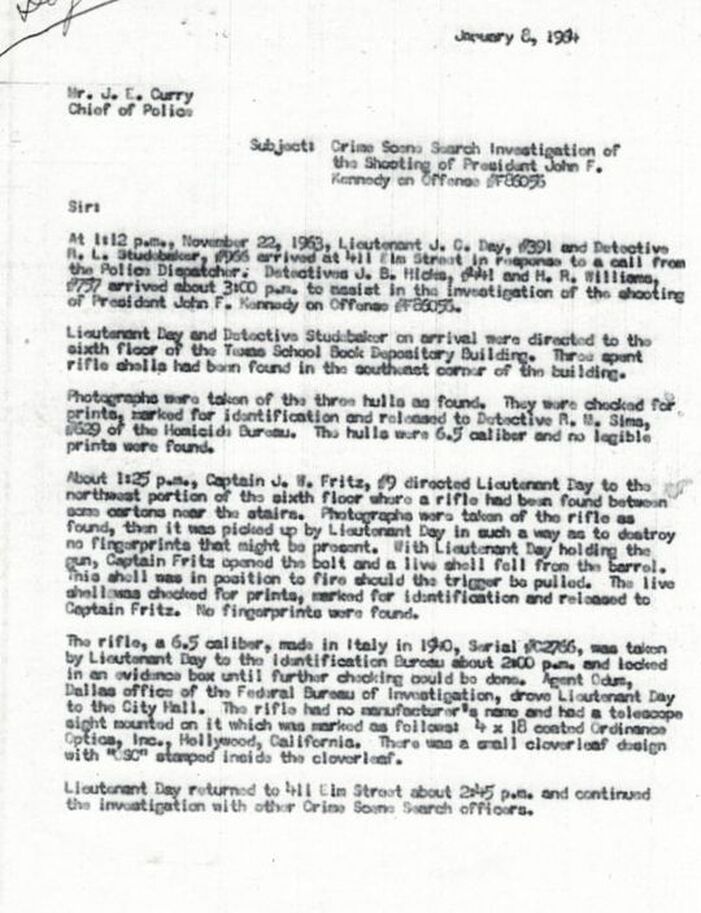
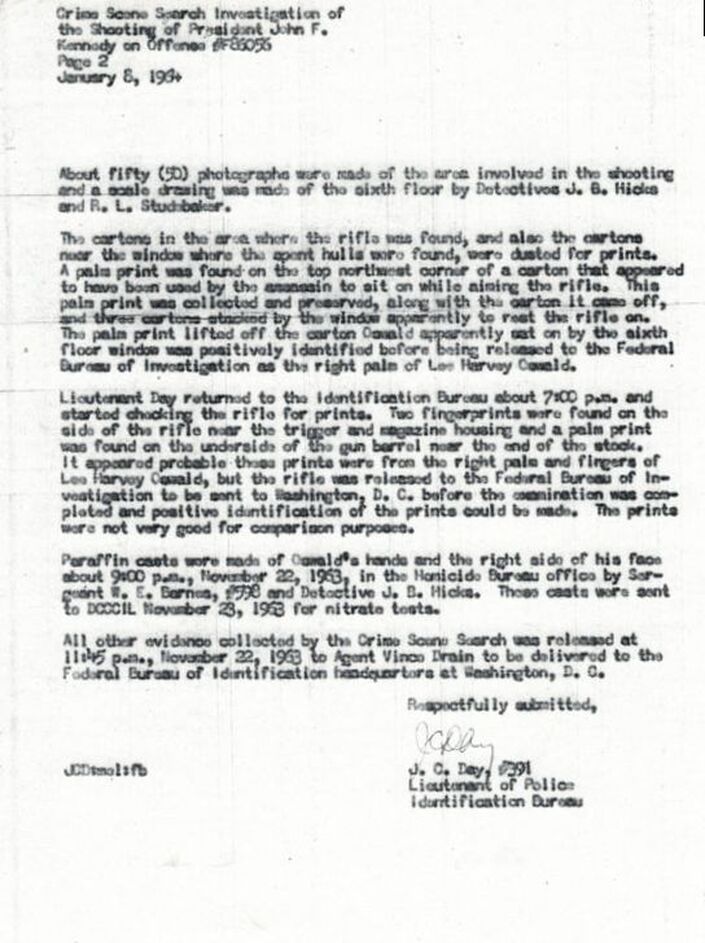
​Lieutenant John Carl Day, Rusty's Crime Lab boss, wrote a memorandum to Chief of Police Jesse Curry and Deputy of Police G.L. Lumpkin detailing his entire investigation of the shooting of President John F. Kennedy. He made seven or eight carbon copies of it and signed each one personally as shown here. A copy of the document appears in the WC as Exhibit 3145. Most of the evidence presented in my book is mentioned in the memorandum, including the map drawn by Detective Studebaker on November 22nd, 1963.


​Dallas Police Crime Lab Memorandum by John Carl Day
     Details Evidence Collected in the 
Assassination
Picture
Picture
Fingerprint evidence collected by the Dallas Police was extensive. Controversy has developed through the years disputing authenticity of some facts developed at the time. Prints were found on the rifle trigger guard, as well as the rifle barrel by Lt. Day. Prints were also located on the sixth floor boxes around the sniper's nest area by Rusty. Remember that much of the evidence sent to the WC was second and third generation, and lost clarity in the process. 

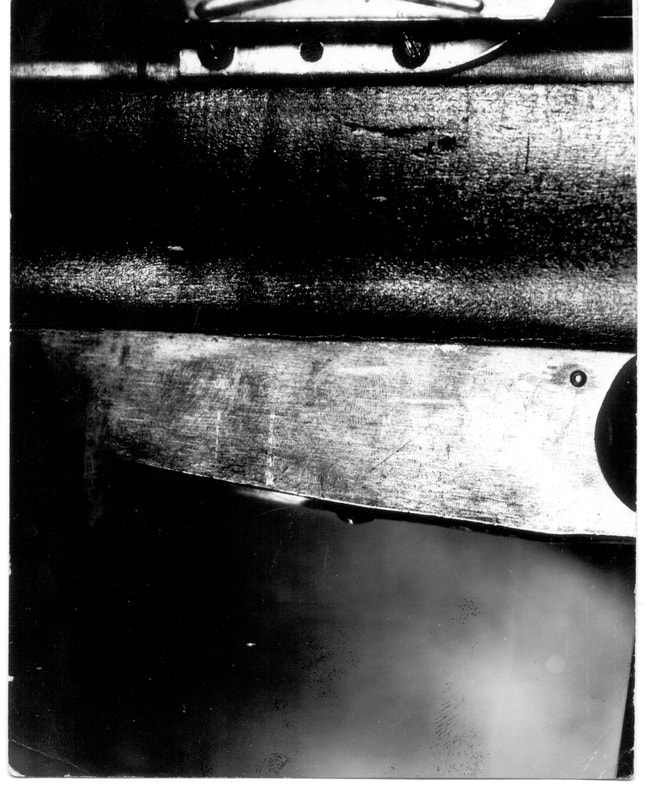
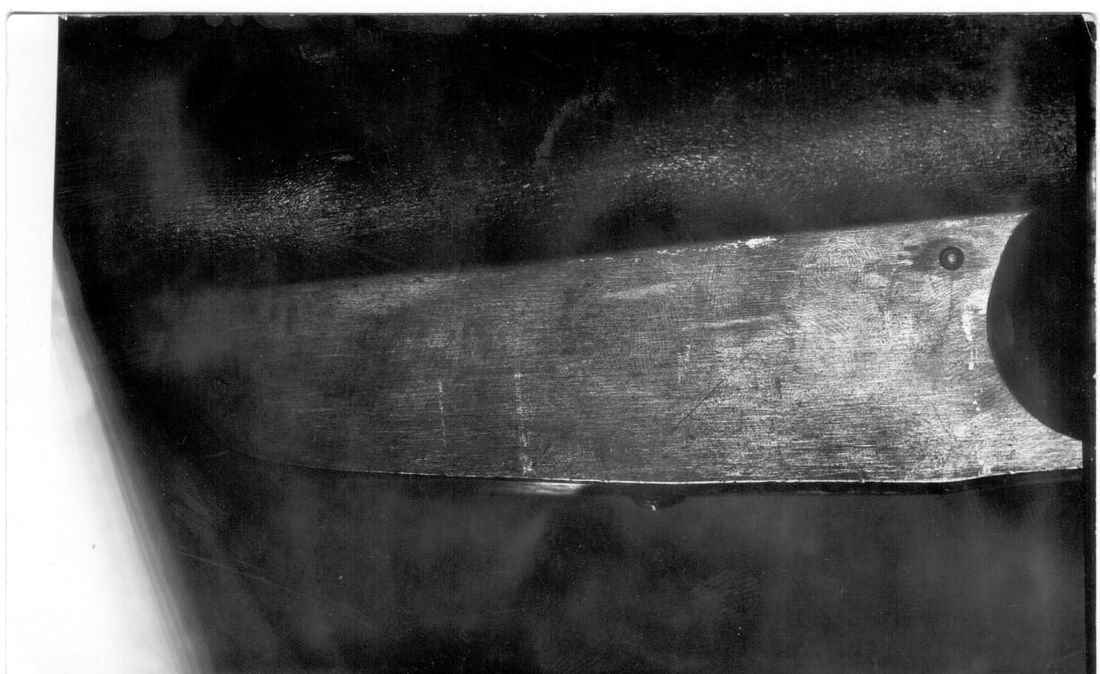
Re-examining the ORIGINAL EVIDENCE Rusty collected on the weekend of the assassination has now determined the fact that Oswald's fingerprints were indeed lifted on the night of the shooting by Lt. Day. Rusty had original photograghs of the trigger guard found showing the fingerprint area. A re-examination was done by Vincent Scalise during the time spent developing my book.

FRONTLINE  ​produced a documentary in 1993 entitled Who Was Lee Harvey Oswald? and sent Mr. Scalise to visit Rusty and me in order to view his photos. He was the man who testified at the HSCA in 1978 about the fingerprint evidence. After examining the photos, he was amazed by the quality and told us that if he'd had these back in the day, he could have called the prints conclusive!

This led to Rusty and me appearing in their documentary. It was three hours long, and the original has now been edited to two hours. Unfortunately, our appearance at the conclusion was removed. I do, however, have the original video sent to me by them. These are two of the original photos kept by Rusty that show fingerprints that were definitively identified as Lee Harvey Oswald:

​​Dallas Police Crime Lab Photos
Trigger Guard of the 6.5 mm Mannlicher Carcano Rifle
Picture
Picture


​THE DEATH OF OSWALD
A second major tragedy which occurred on the weekend following the JFK assassination was the shooting on live television of Oswald by small-time club owner, Jack Rubenstein (Ruby). Once again, the Dallas Police Department was thrust into the national spotlight during the transfer of Oswald from the City Jail to the County Jail on Sunday morning, November 24th, 1963.

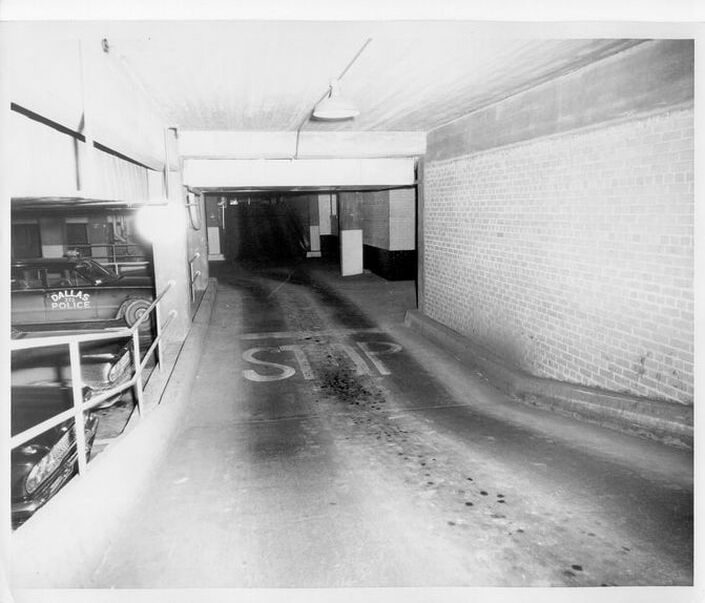
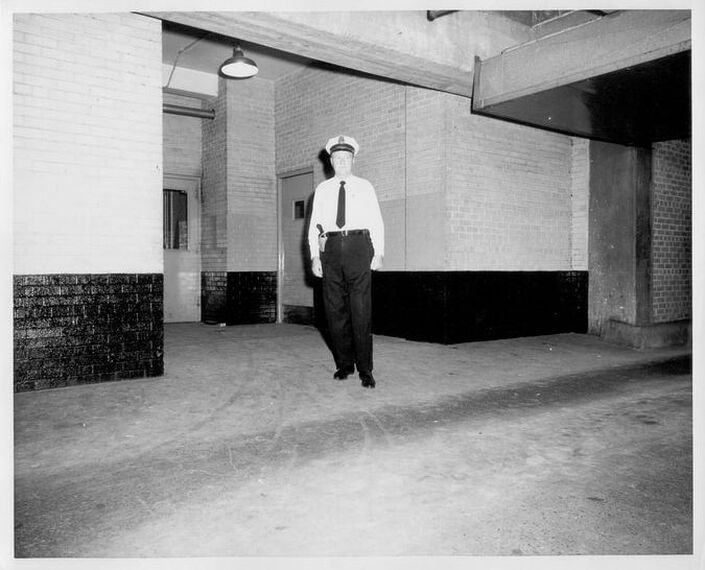
Avoiding the heavy police protection around the immediate transfer location in the basement of the DPD, Ruby slipped unnoticed into a crowd of reporters and television cameramen gathered to broadcast the transfer. A ramp running down from Main Street into the basement led to the transfer position, and Ruby evidently slipped past an officer stationed at the street entrance. 

As Oswald approached the bright lights and cameras, Ruby jumped out and fired a single shot from his revolver, fatally injuring Oswald as he was being escorted between two DPD detectives. Oswald was then transferred by ambulance to Parkland Hospital where he later died. 
​
Dallas Police Crime Lab Photo
Officer Indicating Basement Area where Oswald was Shot

Picture

​Dallas Police Crime Lab Photo
Main Steet Ramp Used by Ruby

Picture
Ruby had been in and around the police station during the weekend following the assassination mingling with reporters in the hall, and actually attended the short press conference where Oswald was peppered with questions. Ruby was known by many of the officers due to his club being in downtown Dallas, and many regarded him as a local police junkie. Rusty told me Ruby would take care of his own rowdy club patrons himself with a set of brass knuckles. He was not regarded as a threat, and simply tolerated around the department, to their later detriment.

Although Ruby claimed that he had shot Oswald out of sorrow over Mrs. Kennedy's loss, Rusty laughed the notion off. He thought of him as a local thug. Ruby passed a note in later years claiming that the Kennedy motivation had been a defense proposed to him by his first attorney, Tom Howard.

Dallas Police Crime Lab Photo
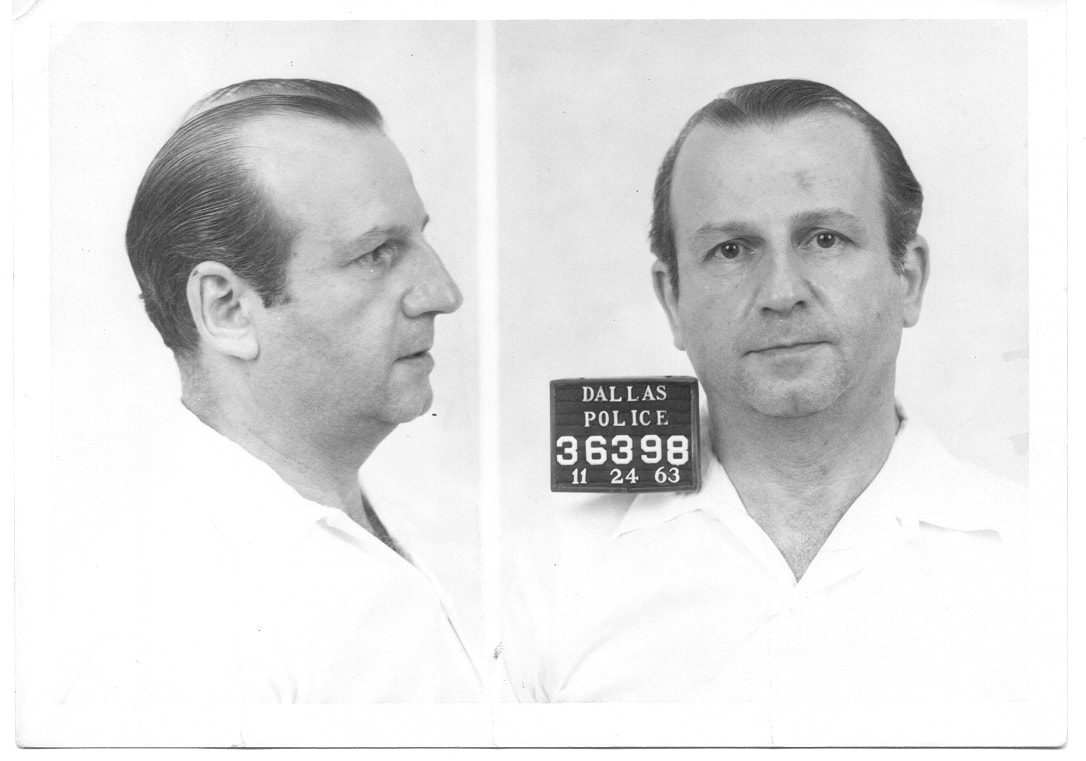
Jack Ruby Mug Shot
Picture
Dallas Police Crime Lab Photo
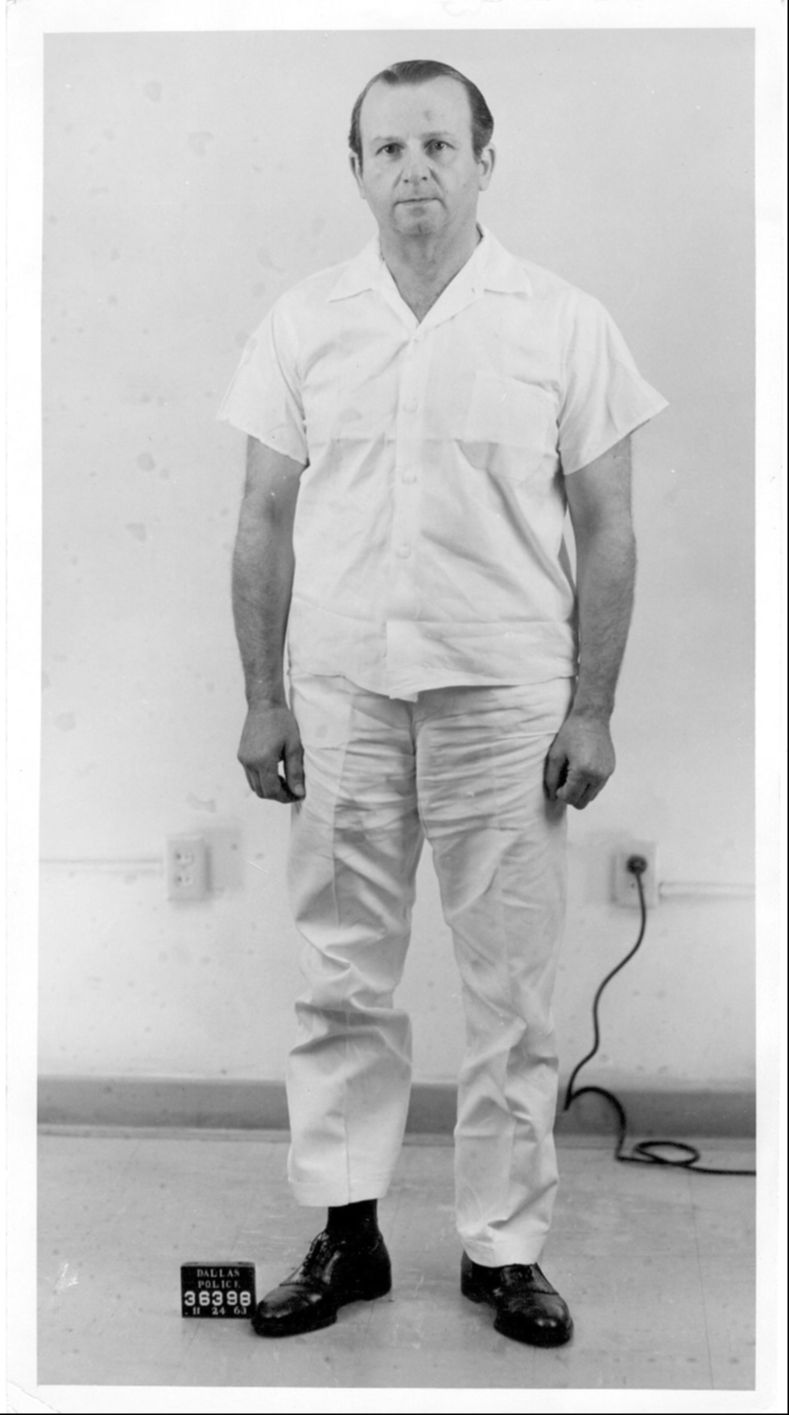
Full-body Photo of Jack Ruby

Picture
The jury found Ruby guilty for the murder of Oswald. He was surprised by the death penalty he received, mistakenly believing they would go easy on him for avenging the death of the president. He later died in prison from complications due to cancer before his death sentence could be carried out. Another chapter was now closed in the assassination of the president, although efforts remain to this day in understanding Jack Ruby's "true motives."


​​PERSONAL EVIDENCE OF OSWALD COLLECTED BY THE DALLAS POLICE

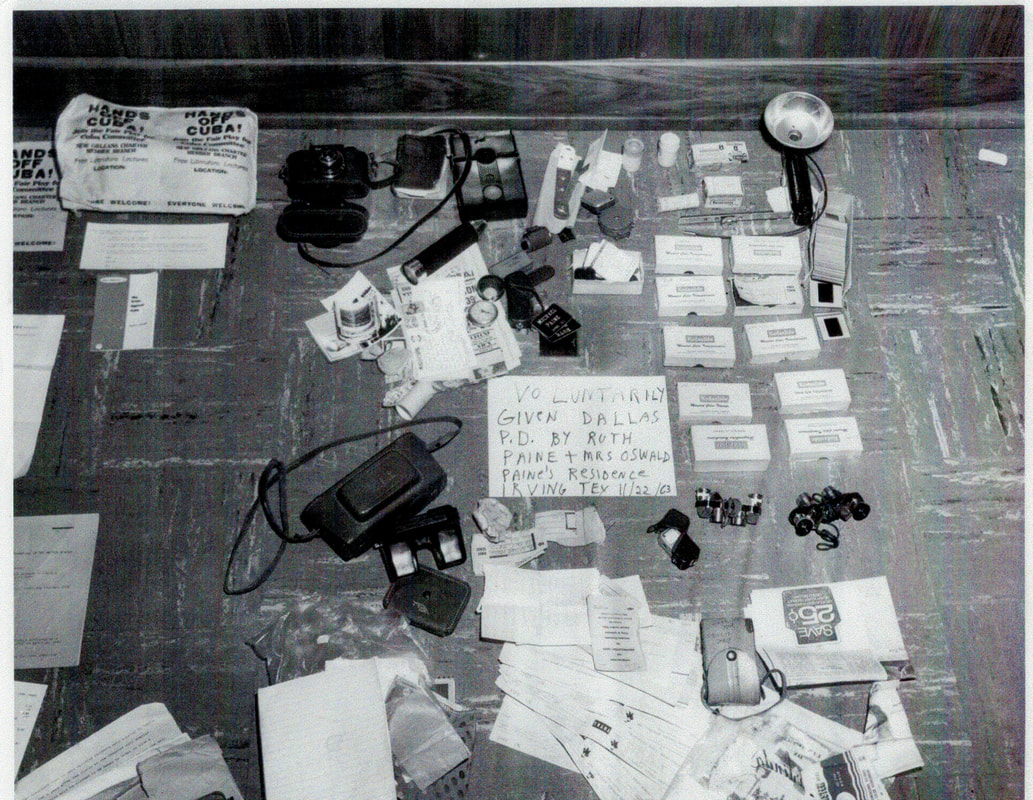
A large amount of personal evidence was collected following the assassination belonging to Oswald. Photographs of himself and his wife Marina, photograph equipment, and various other documents were recovered in the home of Michael and Ruth Paine in Dallas where they were staying. Some of it was laid out on the floor of the basement property room and photographed. 

​Dallas Police Crime Lab Photo
Personal Effects of Oswald Gathered by the DPD
Picture

​Dallas Police Crime Lab Photo
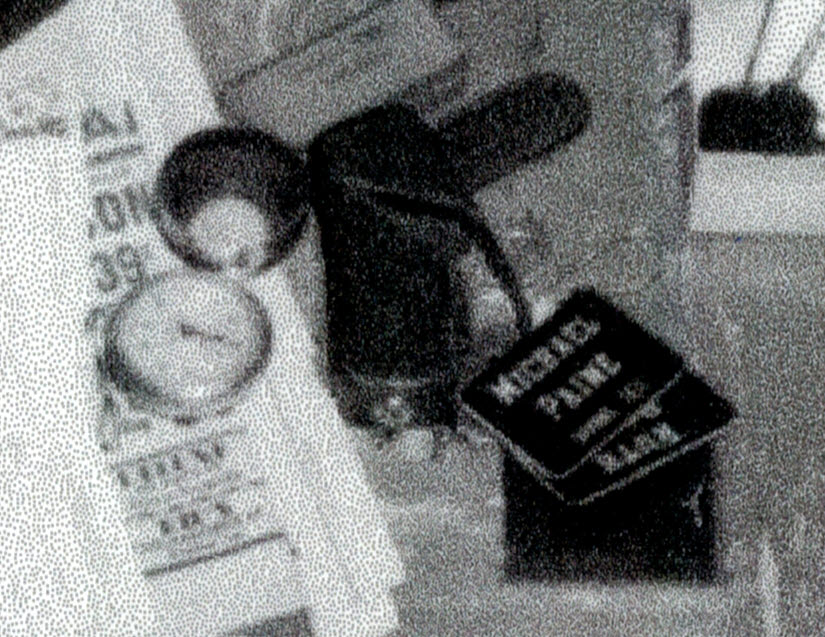
Closeup of the Monox Spy Camera

Picture

​The overall photograph (second above) is uniquely important showing some of Oswald's possessions. Included in the photo middle is a small camera (enlarged immediately above). It does not appear in the volumes of the Warren Commission. A Pandora's box may have been opened if the public became aware that Oswald possessed a German made Minox spy camera.

The FBI went to great effort to convince the Dallas police that they DID NOT FIND THE SPY CAMERA in Oswald's sea bag from the Paine garage. Rusty had in his possession all along the photo, not knowing it contained anything that had not be publicly seen before.

The FBI later took possession of the evidence collected by Dallas detectives. Gus Rose later told me that the FBI had come to him THREE TIMES to tell him that he did not find what he found. He finally told them to not come back, and that he had indeed found the camera. Jesse Curry, the Police Chief, also later published a book with other evidence photos, but this one was not included. It is possible that the FBI seized the original negatives, not realizing that Rusty had made a copy beforehand. 

Many researchers today still believe that Oswald MAY have been some type of low-level government agent. The truth may never be revealed, although many hope that with the final release of all the remaining evidence by the federal government, much could be finally exposed. His wife Marina later said, "Now, looking back at his character, I can see that he had certain traits of professional training, like being secretive, and I believe he worked for the American government.

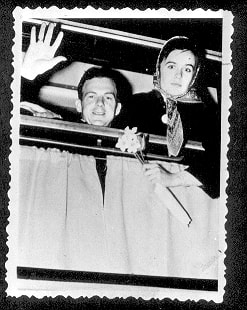
​Personal Photo of Lee and Marina Leaving Russia
Picture

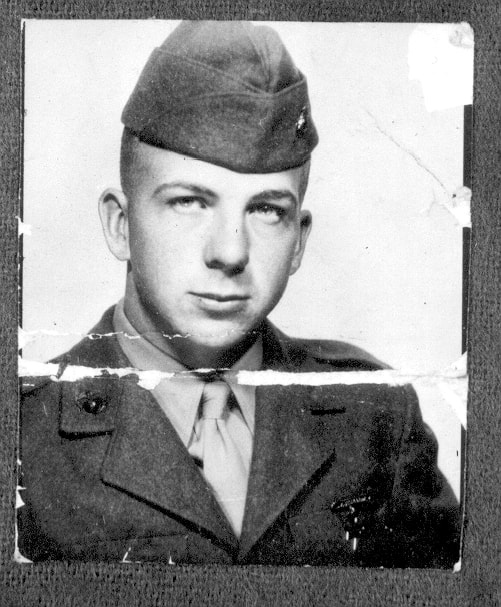
​Photo Of Lee Harvey Oswald
Picture
A multitude of other photos and document copies of Oswald's possessions were made of the items located, and I included all that Rusty had in my book. Once again, the quality of the copy camera used by the DPD Crime Lab was of superior quality for its day, and the evidence presented here are the best seen to date.


A FINAL NOTE concerning evidence shown in JFK First Day Evidence concerns the "acoustics evidence" used by the HSCA in 1978 to draw the erroneous conclusion of multiple shooters in Dealey Plaza. An entire book was written by Jim Bowles, head of the communications department in the DPD in 1963 titled, THE KENNEDY ASSASSINATION TAPES, and is included in its entirety in my book's appendix.

In summary, the recordings were later used to support a loose claim that a fourth shot was fired and recorded by a motorcycle officer inside Dealey plaza. The committee inaccurately reached a final "conclusion" there were multiple shooters. This is not the case. The book explains in meticulous detail how the motorcycle officer was actually at the Trade Mart awaiting the arrival of the motorcade which unexpectedly did not stop, speeding by towards Parkland Hospital. 

As I state in the final declaration in my book:

​"We cannot, however, summarily discount the evidence that does not fit our particular scenario and then accept on the evidence which does. I, for one, do not feel that the innocent bystander witnesses forever affected by what they saw on November 22nd, 1963, lied (unless it is proven). Let's accept what they said as forthright and try to put ALL of the pieces together to arrive at the truth."
​

Then you will know the truth, and the truth will set you free. (John 8:32)


0 Comments


Leave a Reply.

    Author

    Gary Savage is the author of JFK First Day Evidence, published in 1993.  It took five years to complete.

    Archives

    October 2023
    October 2022

    Categories

    All

    RSS Feed

Site powered by Weebly. Managed by Hostgator
  • Home
  • About Me
  • Blog
  • OTHER INTERESTS
  • Contact
  • PROJECT PLANS